Pass the torch: How experienced campers can model responsible recreation.

If you’re the kinda person who lives and breathes camping, and would call yourself a bit of a pro at it (it’s okay to brag a little here), then you’re the right person to help our next generation of newbie, keen campers learn to camp responsibly.
Whether you’ve been RVing for 30 years, hiking through the backcountry for 15, or car-camping with your family for generations, people with vast camping experience and a keen sense of respect for and responsibility to nature are the advocates we need to teach and inspire smart, safe, and responsible recreation for all.
Sometimes, all it takes is a conversation or an action that’s witnessed to support newcomers to learn, question, and model great behaviours.
Here are some ideas on how you can help:
Lead a campsite clean up
You can do this simply by taking initiative and cleaning up a campground and inviting those you see along the way to pitch in. Or, you can do this more “officially” by creating an event for other campers to participate in at your favourite campground.
Advocate for adherence of campground rules
We know: no one likes to be told what to do or to be reminded they’re doing it wrong. There is nuance to this, for sure. Introduce yourself to your fellow campground campers and while you’re chatting, bring up rules like quiet time hours or ask if they’ve seen the rules posted and why it might be a good idea to check it out.
Run a workshop
If you’re extra keen, we applaud your enthusiasm! We need more campers like you. Consider running an informal workshop at your campground or in your community. Gather in the communal area or invite campers to your site for s’mores and a chat.
Here are some tips to sharing the best of what you know:
Tip 1 – Choose one topic
Stick to something practical, fun, or relevant to outdoor living, such as:
- Kids’ nature scavenger hunt and clean up
- Leave No Trace principles
- Wildlife safety
- Nature journaling or photography
Tip 2 – Choose a great location
Pick a central, visible, and quiet location that’s easy to access, like a picnic shelter, communal fire pit, or flat clearing that’s not too close to individual campsites (We don’t want your workshop to disturb others). Don’t forget to ask the campground operator for permission—just in case!
Tip 3 – Keep it short!
Say hello from a distance and, if it feels right, shake a hand and have a conversation. Knowing your neighbours not only creates community but also builds respect and helps keep everyone safe.
Tip 4 – Bring simple visuals or demos
If you have them, bring them!
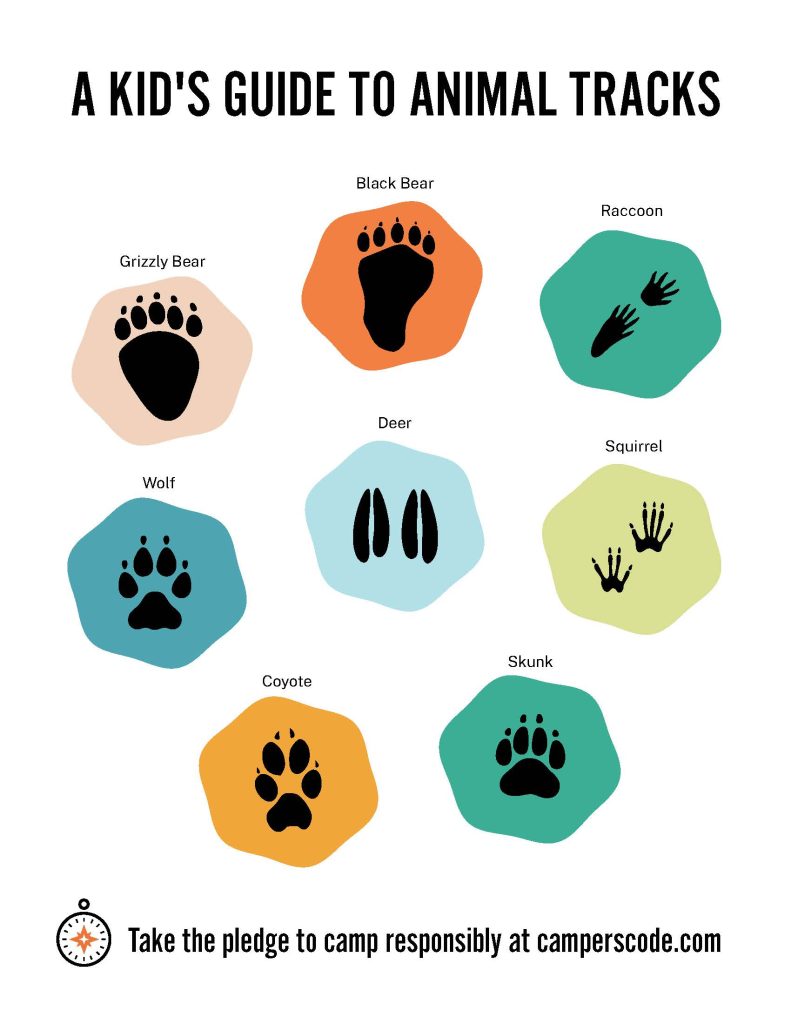
Download our kid-friendly Animal Tracks Guide. Take it with you as you explore the beautiful outdoors.
Tip 5 – Make it interactive
Engage your audience. People who show up already care, so ask them to share their own tips and experiences.
Tip 6 – Try something hands-on
Maybe clean up the campground together or practice the thumb rule. Identify tracks and scat, or teach how to put up a bear cache.
Tip 7 – End with a Call to Action
Ultimately, we want to encourage new campers to:
- Try what they learned that day
- Share their key takeaway with a neighbour
- Join the next clean-up, hike, or nature viewing.
- Pledge to follow the Campers Code
The goal is to have new campers and children Take the pledge and to follow the Camper’s Code.
Note: Check your email for the verification email and to ensure your mailing address is correct, so we can send your campers code pledge sticker.
Reminder: In British Columbia, camping, as well as having fun outdoors, is also about preventing wildlife conflicts and staying safe in remote areas.
Published: September 23, 2025
Last Updated: September 24, 2025