Know your tracks & hide your snacks: Tips to help kids respect wildlife at camp.

Kids LOVE camping! Fresh air and s’mores, dirty fingernails and staying up late. It’s important to mix in some education with all that fun. It’s our job as parents or guardians to raise the next generation of responsible recreators. Here are some ways to do it — Without your kids calling you out for being way too boring.
Lead by example.
Kids who see their parents respecting wildlife learn by observing and copying the actions and behaviour of adults. Take it one step further by narrating what you’re doing or explaining why you’re doing it so it really sets in:
Observe wildlife from a distance, maybe with binoculars
Keeping a safe distance prevents animals from feeling threatened or stressed out. Happy wildlife is our favourite wildlife. Remember: We’re guests in their home.
Do not interact with wildlife
We don’t feed animals in the wild, and we don’t try to pet, stroke, or touch them either — ever. A great way to know if you’re a safe distance away is to use the Thumb Rule. Extend your arm and hold your thumb up. If the animal is completely covered by your thumb, you are at a safe distance. If you can still see the animal (your thumb doesn’t over it), you are too close and should back away until your thumb obscures it entirely.


Learn about animals together.
Make learning about the animals local to your campsite a family affair.
Get a book on animal tracks, like this one and go exploring. Identify tracks together.
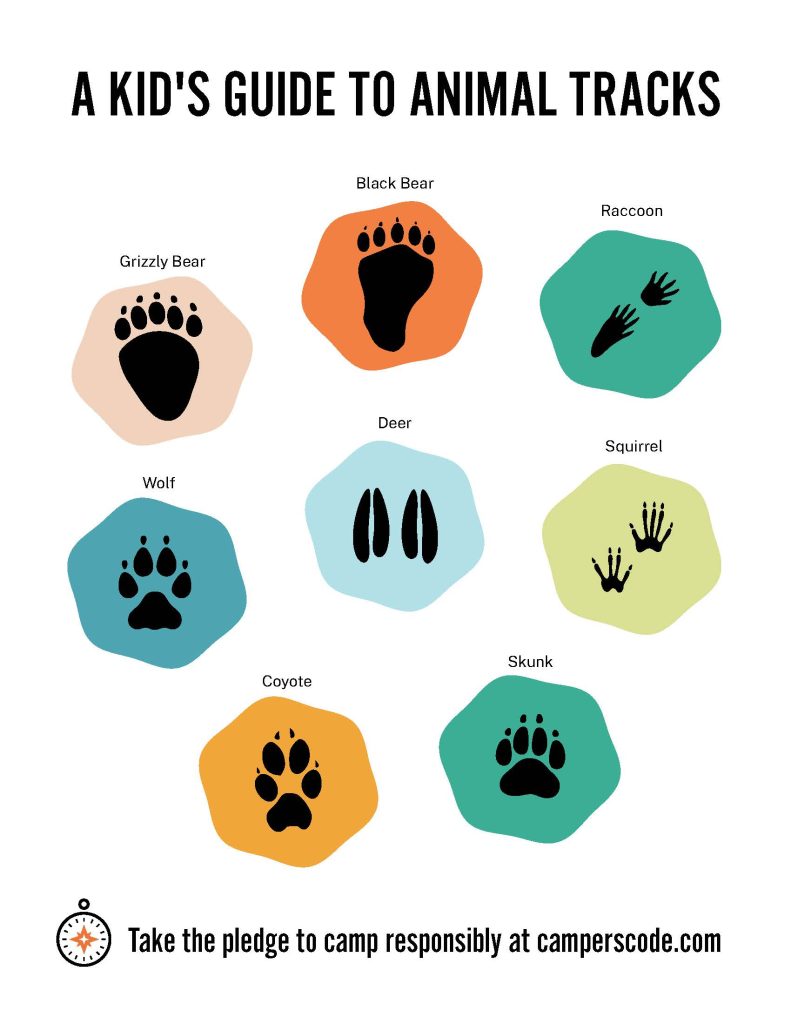
Download our kid-friendly Animal Tracks Guide. Take it with you as you explore the beautiful outdoors.
Learn about poop. Nothing makes kids laugh more than poop talk. Go hunting for animal scat and learn to identify it together.

Emphasize proper food storage.
Kids can be messy little rascals. Talk about the importance of storing food safely, cleaning up garbage, and keeping the campsite clean. When you leave food around, even little crumbs, animals may be attracted to your campsite. Mice, skunks, and raccoons can track food from far away and they’re happy to rummage through your snacks while you sleep.
Reminder: In British Columbia, camping as well as having fun outdoors is also about preventing wildlife conflicts and staying safe in remote areas.
Take the pledge to follow the Camper’s Code. Note: Please check your email for verification email and to ensure your mailing address is correct, so we can send your sticker.
Happy camping—and may your only visitors be family and friends.
Published: August 15, 2025
Last Updated: August 25, 2025